Best Canary Island for Diving: All 7 Islands Compared
Which Canary Island Is Best for Diving?
For most divers, Lanzarote is the best all-round Canary Island for diving: it pairs reliably clear water and easy shore entries with Europe's first underwater sculpture museum and some of the archipelago's best odds of seeing an angel shark. El Hierro beats it on pure underwater quality — its protected pinnacles at La Restinga are widely considered the finest diving in the Canaries — but it takes real effort to reach. Tenerife wins on convenience, with the most flights, the most dive centers, and turtles and rays close to shore.
That is the short version. The honest longer version is that "best" depends on what you dive for, and the seven islands differ far more underwater than their package-holiday reputation suggests. This guide compares all seven so you can match an island to your certification level, travel style, and wish list.
What All Seven Islands Share
Before the comparison, it helps to know what is constant across the archipelago, because a few things genuinely are:
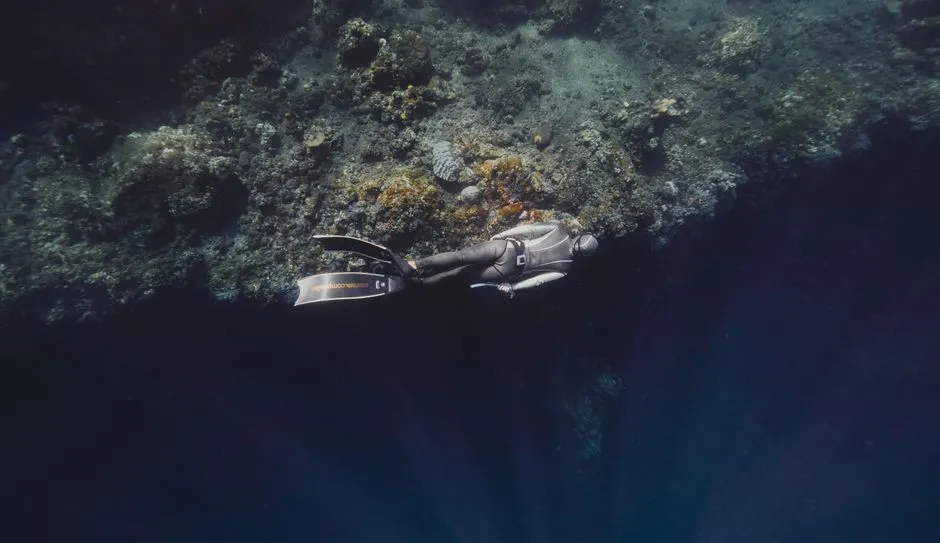
- Volcanic topography. These are Atlantic volcanic islands, so expect lava reefs, arches, swim-throughs, caverns, and dramatic rock architecture rather than coral gardens. The seabed drops away quickly almost everywhere.
- Clear, temperate water. Visibility of 15–30 meters is common on calm days. Water temperatures typically range from around 18–19°C in late winter to 23–24°C in late summer and early autumn — wetsuit diving, not tropical diving. Our month-by-month conditions guide breaks down the seasons in detail.
- Year-round diving. There is no closed season. Winter brings cooler water and occasionally bigger swell; summer brings warmer water and calmer seas. Operators simply pick sheltered coasts when one side is blown out.
- Eastern Atlantic marine life. Barracuda schools, stingrays and eagle rays, moray eels, groupers, octopus, trumpetfish — plus the region's signature resident, the critically endangered angel shark, which winters on Canarian sand flats.
Because the baseline is high everywhere, choosing an island is less about avoiding bad diving and more about optimizing for what you care about most.
The Seven Islands Compared
| Island | Best for | Underwater signature | Effort to reach |
|---|---|---|---|
| Lanzarote | Best all-rounder | Museo Atlántico sculptures, Playa Chica shore diving, angel sharks | Easy — direct international flights |
| Tenerife | Convenience and variety | Turtles, rays, small wrecks, easy shore entries | Easiest — most flights of any island |
| El Hierro | Underwater quality | La Restinga's pinnacles and the Mar de las Calmas reserve | Hard — connect via Tenerife by air or ferry |
| Gran Canaria | Reserves and wrecks | El Cabrón marine reserve, wreck diving on the south coast | Easy — direct international flights |
| La Palma | Scenery and quiet | Steep drop-offs, lava arches, superb visibility | Moderate — fewer direct flights |
| La Gomera | Escaping the crowds | Pristine volcanic reefs, very few divers | Moderate — usually ferry from Tenerife |
| Fuerteventura | Combining sports | Sandy bays, reef fish, Lobos island trips | Easy — direct international flights |
Lanzarote — the best all-rounder
Lanzarote concentrates more headline diving into a small area than any other island. The town of Puerto del Carmen is built around Playa Chica, one of Europe's best shore-diving bays: a protected cove where a few steps from the beach put you over reefs, drop-offs, and caverns at every depth from training-friendly shallows to advanced walls. Off the south coast sits the Museo Atlántico, an underwater museum of concrete human figures that has matured into an artificial reef and become the archipelago's most famous single dive.
Lanzarote is also one of the most reliable places on Earth to see an angel shark in season — the sandy bottoms around Puerto del Carmen are classic wintering habitat. Our angel shark guide covers where, when, and how to behave around this protected species.
Choose Lanzarote if: you want easy logistics, shore diving, a signature dive (the museum), and strong angel shark odds in one trip.
Skip it if: you want wild, remote diving — Lanzarote's best sites are popular and can be busy.
Tenerife — the convenience champion
Tenerife is the largest, most connected island, and its sheltered south and southeast coasts hold dozens of dive sites within a short drive of the main resorts. The diving here is defined by accessibility: gentle shore entries, short boat rides, resident green turtles at a handful of well-known sites, stingrays and eagle rays over volcanic sand, and a few small, diveable wrecks in recreational depths.
It is the easiest island on which to learn, to bring a non-diving family, or to log relaxed dives between other activities. The trade-off is that Tenerife's most famous sites see a lot of traffic, and the underwater terrain — while good — rarely reaches El Hierro or La Palma levels of drama. For a site-by-site breakdown, see our full Tenerife diving guide.
Choose Tenerife if: you value flight options, operator choice, and dependable, easy diving — especially as a newer diver or a mixed diving/non-diving group.
Skip it if: busy sites bother you, or you are chasing the archipelago's best big-terrain diving.
El Hierro — the connoisseur's island
Ask experienced Canaries divers to name the best diving in the archipelago and most will say El Hierro without hesitating. The tiny fishing village of La Restinga, on the island's southern tip, sits beside the Mar de las Calmas — the "sea of calms" — a protected stretch of water sheltered from the prevailing swell. The diving is volcanic architecture at its finest: pinnacles, walls, and boulder fields in exceptional visibility, with dense fish life, big groupers, and genuine pelagic potential. El Bajón, a twin-peaked seamount rising from deep water, is routinely ranked among the best dives in Spain.
The catch is access. El Hierro has no direct international flights; you connect through Tenerife by small plane or ferry, and the island's tourism infrastructure is minimal by design. That is precisely why the diving has stayed so good.
Choose El Hierro if: underwater quality is your only priority and you are happy to build a trip around getting there.
Skip it if: you want resort comforts, nightlife, or a simple fly-and-flop week.
Gran Canaria — reserves, wrecks, and city diving
Gran Canaria's underwater highlight is the El Cabrón marine reserve near Arinaga on the east coast — a protected volcanic reef complex of arches, caves, and gullies with some of the densest fish life in the eastern islands. The south and southwest coasts add genuine wreck diving, with several vessels sunk as artificial reefs at recreational depths, and the capital, Las Palmas, offers the unusual pleasure of good shore diving on a city beach.
Conditions at El Cabrón are swell-dependent — the entry is over rocks and locals call the shots on diveable days — which is worth building flexibility into your plans.
Choose Gran Canaria if: you want a strong reserve, wrecks, and big-island infrastructure in one destination.
Skip it if: your heart is set on the archipelago's clearest water — the western islands generally edge it.
La Palma — the beautiful outsider
La Palma, the steep green island in the northwest, offers arguably the most visually striking diving after El Hierro: sheer volcanic drop-offs, lava tubes and arches, and frequently superb visibility in deep blue water. Dive tourism is small-scale, sites are uncrowded, and the topside island — a UNESCO biosphere reserve of forests and calderas — rewards non-diving days like nowhere else in the Canaries.
The trade-off is a shorter menu: fewer operators, fewer flights, and marine life that skews toward reef fish and scenery rather than big-animal encounters.
Choose La Palma if: you want dramatic terrain, quiet sites, and a spectacular island topside.
Skip it if: you need maximum operator choice or the easiest possible connections.
La Gomera — the quietest water
La Gomera is the least developed dive destination of the seven. Reached most easily by ferry from Tenerife, it has only a handful of dive operations, and its volcanic reefs see so few divers that the fish life is notably relaxed. Expect boulder slopes, rock formations, rays, and the ordinary Canarian cast — shared with almost nobody.
Choose La Gomera if: solitude underwater matters more to you than famous sites.
Skip it if: you want variety, wrecks, or a full week of structured diving — the island suits a few dive days within a broader trip.
Fuerteventura — the wind island
Fuerteventura is world-famous for wind — which explains both its surf and kite scene and its more modest diving reputation. There is perfectly good diving here, particularly around the sheltered corners of the north and the protected islet of Lobos, with sandy bays, reef fish, rays, and occasional angel sharks. But conditions are more frequently disrupted than on the leeward coasts of the western islands.
Choose Fuerteventura if: diving is one part of a multi-sport or beach holiday.
Skip it if: diving is the whole point of your trip — several islands simply offer more.
Lanzarote vs Tenerife: The Most Common Head-to-Head
These two islands dominate the decision for most first-time Canaries divers, so here is the direct comparison:
- Signature dives: Lanzarote wins — the Museo Atlántico and Playa Chica are more distinctive than anything comparable on Tenerife.
- Marine life: Roughly even. Tenerife has more reliable turtles; Lanzarote has better angel shark odds in winter.
- Ease and infrastructure: Tenerife wins on flights, operators, and non-diving options for a mixed group.
- Shore diving: Both are excellent; Playa Chica gives Lanzarote a slight edge for pure convenience underwater.
- Atmosphere: Personal taste — Lanzarote is lower-rise and more design-conscious; Tenerife is bigger and busier with more contrast between coasts.
If forced to choose: divers pick Lanzarote, mixed groups pick Tenerife, and neither choice is wrong.
How to Decide in 30 Seconds
- First dive trip, or non-divers in tow: Tenerife.
- One island, best overall diving-per-effort: Lanzarote.
- Best diving, effort no object: El Hierro.
- Wrecks plus a marine reserve: Gran Canaria.
- Dramatic walls and quiet sites: La Palma.
- Total escape: La Gomera.
- Diving alongside surf and wind sports: Fuerteventura.
Whichever island you choose, timing shapes the trip as much as geography — water temperature, visibility, and angel shark season all move through the year, so check the best time to dive the Canaries before you book. And wherever you splash, dive within your certification, get a proper local briefing, and let conditions on the day have the final word.